The second spring after I left my job at the bank, I stood at the kitchen window with a cup of coffee going cold and stared at our backyard. It's big for a ranch house in town, and at the time it was just grass, a swing set, and a patch by the fence where nothing grew except dandelions. I remember thinking, "We should grow food out there." Then I remember looking at the price of raised bed kits and thinking, "Maybe not."
We did it anyway, three years ago, and the whole first garden cost us $47. It's early April now, the seed trays are on the windowsill again, and people keep asking me how to get started without spending a fortune. Here's exactly what we did.
Where the $47 went
| Item | Cost |
|---|---|
| Six seed packets (beans, lettuce, radishes, zucchini, peas, marigolds) | $11 |
| Two cherry tomato plants | $7 |
| Six bags of compost and garden soil | $18 |
| Hand trowel (thrift store) | $3 |
| Bird netting for the peas | $6 |
| Twine for stakes | $2 |
| Total | $47 |
Everything else came from around the house or from people who were happy to get rid of it. My dad gave us an old shovel and a rake. The stakes were scrap lumber from Mike's shed. We already had a hose.
Skipping the raised beds
The most expensive part of most garden plans is the beds themselves. A single cedar raised bed kit can easily cost more than our whole garden. We planted straight into the ground instead.
How we turned lawn into garden without renting a tiller
- In late March, we marked out a 10-by-12-foot rectangle in the sunniest part of the yard.
- Mike and I cut the sod into squares with a flat shovel and flipped them upside down. It was a sweaty Saturday, but it cost nothing.
- We covered the flipped sod with flattened cardboard boxes, then soaked everything with the hose.
- On top of that went the six bags of compost and soil, raked out as evenly as we could manage.
- We let it sit for about three weeks before planting the cool-weather crops.
The first year the soil was rough. There were clumps of grass trying to come back and plenty of clay. By the second year, the cardboard and sod had broken down, and the bed was noticeably darker and easier to dig. We've added our own compost and fall leaves every year since.
Starting seeds on a windowsill
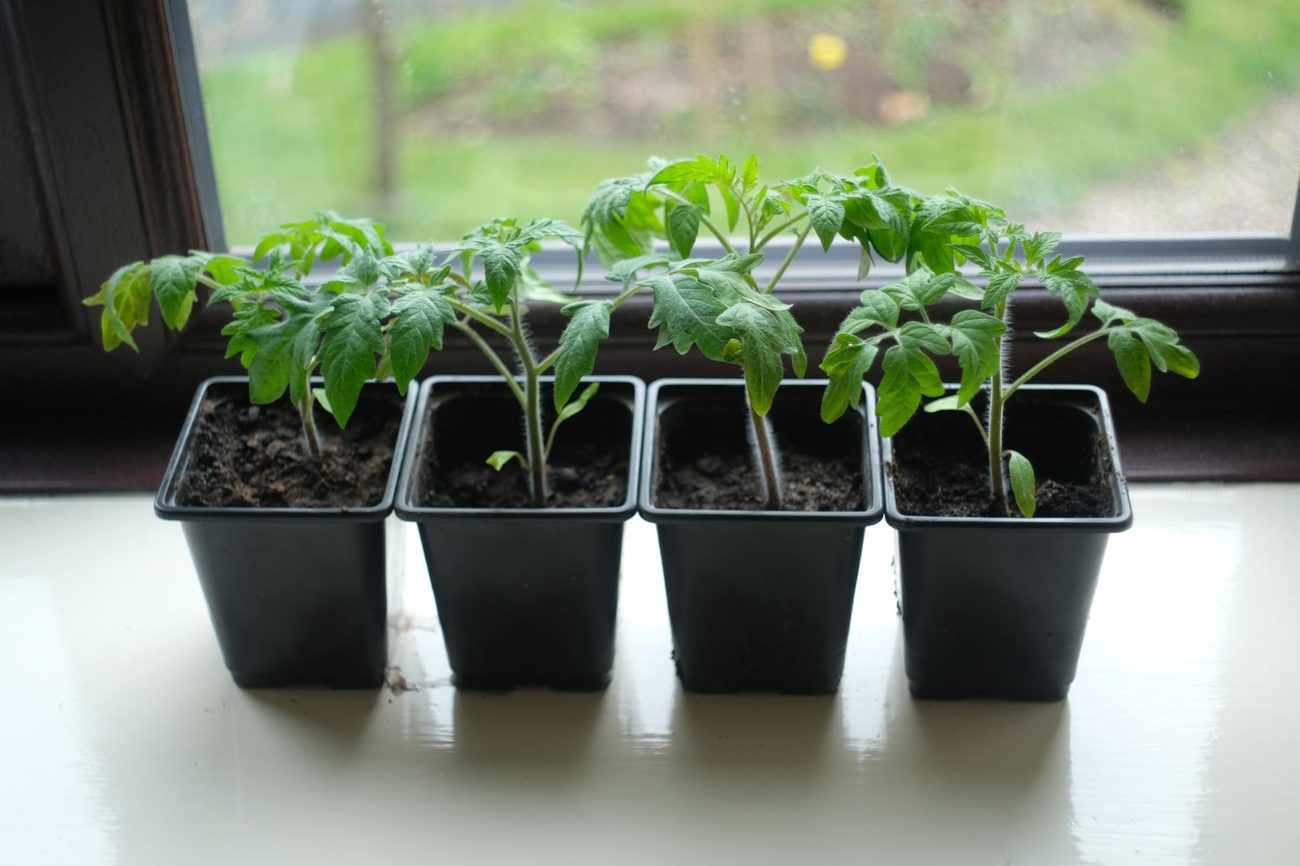
I didn't buy grow lights, heat mats, or seed-starting kits. For the tomatoes and marigolds we started ourselves, I used cardboard egg cartons filled with a little of the bagged soil. Poke a small hole in the bottom of each cup, set the cartons on a cookie sheet, and put them in your sunniest window.
A few honest notes:
- Seedlings on a windowsill get tall and floppy as they lean toward the light. Turning the tray every day helps.
- Our homegrown tomato seedlings were so spindly that year that I gave up and bought two plants. That's why they're on the receipt.
- Marigolds, on the other hand, were nearly impossible to kill. We still grow them along the edge to bring in bees.
In Ohio our last frost usually comes in early to mid-May, so early April is right on time for starting seeds indoors. Peas and lettuce can go straight into the ground in mid-April if the soil isn't soggy.
Free and nearly free extras
- Seed swaps: Our public library runs a seed library in the spring. We've picked up bean and squash seeds there and returned saved seeds the next year.
- Mulch: Grass clippings and shredded leaves from our own yard. Just make sure the grass hasn't been treated with weed killer.
- Watering: A five-gallon bucket under the downspout catches more rain than you'd expect. We use it for the tomatoes.
- Plant labels: Popsicle sticks, which the kids decorate. Rosie's are illegible, but charming.
Was it worth it?
That first summer, I kept a rough tally of what we picked: bags of green beans, more zucchini than we could eat, salad greens for about six weeks, and a steady bowl of cherry tomatoes through September. I figure we got back at least three times what we spent, even with the crops that failed.
The bigger surprise was the kids. Owen, who at the time refused anything green, ate raw peas right off the vine. This year I'm adding a second, smaller bed along the fence. It will cost almost nothing, since everything we need is already in the shed.