The first loaf of bread I ever made by hand could have propped open a door. It was dense, pale, and sort of damp in the middle, and Mike ate two slices of it anyway because he is a kind man. I didn't have a stand mixer then and I still don't. It turns out you don't need one. You need a big bowl, a wooden spoon, about ten minutes of kneading and some patience.
These days I bake two loaves most Sunday afternoons. A plain loaf of sandwich bread costs us $2.79 or more, and this recipe makes two for under $2 total. We still buy a third loaf most weeks, because five people go through a lot of bread, but even baking two a week saves us around $190 a year.
The recipe
Makes two 8.5 x 4.5-inch loaves. Costs are what I paid at Aldi this winter.
Ingredients
- About 6 cups all-purpose or bread flour, plus a little for the counter - about $1.05
- 1 cup milk - about $0.20
- 1 1/4 cups water
- 3 tablespoons butter, melted - about $0.35
- 2 tablespoons sugar - about $0.05
- 2 1/4 teaspoons instant or active dry yeast (one packet, or scooped from a jar) - about $0.25
- 2 teaspoons salt - about $0.02
Total: about $1.92 for two loaves, or 96 cents each.
Steps
- Wake up the yeast. Warm the milk and water together until it feels like a warm bath on your wrist, around 110 degrees. Stir in the sugar and yeast and let it sit 5 to 10 minutes until foamy.
- Beat the first half. Add the melted butter, salt and 3 cups of flour. Beat hard with a wooden spoon for two full minutes. This is where the spoon does the mixer's job, and it's the step I skipped when I made my brick.
- Add the rest slowly. Stir in more flour, half a cup at a time, until the dough pulls away from the bowl in a shaggy lump. You may not need all 6 cups.
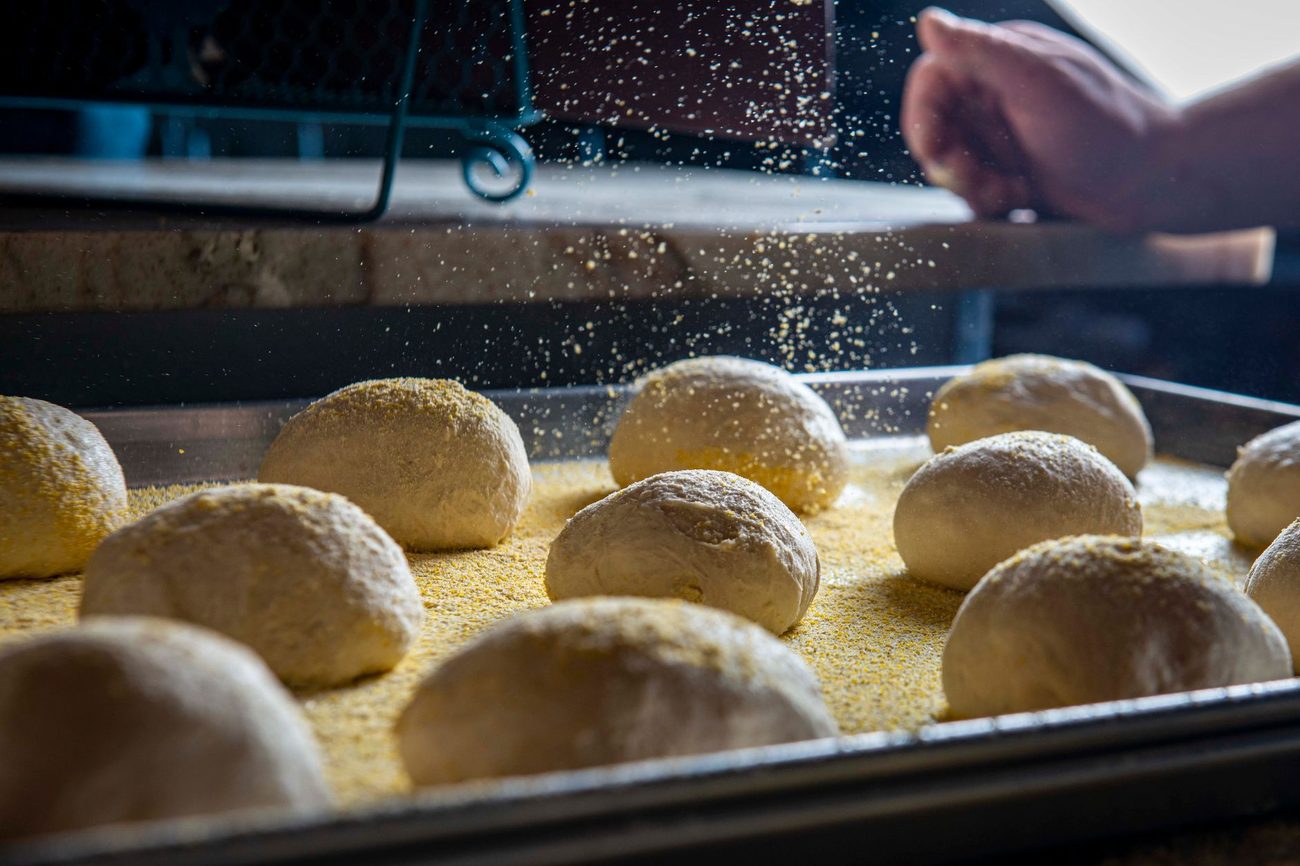
- Knead. Turn it onto a lightly floured counter and knead for 8 to 10 minutes, pushing it away with the heel of your hand, folding it back and turning it. It's ready when it's smooth and springs back when you poke it.
- First rise. Put it in a greased bowl, cover with a towel, and let it rise until doubled, 60 to 90 minutes.
- Shape. Punch it down, cut it in half, and press each half into a rectangle about as wide as your pan is long. Roll it up tightly, pinch the seam closed and set it seam-side down in a greased pan.
- Second rise. Cover and let rise until the dough domes about an inch over the rim of the pan, around 45 minutes.
- Bake. Bake at 350 degrees for 30 to 35 minutes, until the tops are golden and the loaves sound hollow when you tap the bottom. If you own a kitchen thermometer, the middle should read about 190 degrees.
- Cool completely. Tip them out onto a rack and wait at least an hour before slicing. This is the hardest step in the whole recipe, especially with three kids circling the counter.
Tips for a cold kitchen
Our 1970s ranch is drafty in February, and the kitchen hovers around 64 degrees on a gray day. Dough rises slowly in the cold, which isn't a disaster, but it can double your wait. Two things help:
- Put the bowl in the oven with just the oven light on (oven off). The light alone keeps it cozy.
- Or set the bowl on top of the fridge, which gets a little warmer than the counter.
And judge the rise by how the dough looks, not by the clock. "Doubled" is the goal, however long it takes.
If you're tired of kneading
Some weeks my wrists aren't up for ten minutes straight. On those days I do a lazier version: knead for one minute, cover the dough and walk away for ten minutes, then knead another minute. Three rounds of that gets you nearly the same result. The resting time does a lot of the work for you.
What I got wrong at first
- Too much flour. This is the big one. Sticky dough makes you want to keep adding flour, and too much gives you a dry, heavy loaf. The dough should feel a little tacky, like the back of a sticky note, not dry.
- Liquid too hot. Very hot water kills yeast. Warm, not hot.
- Slicing warm. A warm loaf squishes and turns gummy under the knife. Wait.
We eat one loaf over the first couple of days and I slice and freeze the second so it doesn't go stale. Frozen slices go straight into the toaster or thaw on the counter in time for lunches.
Owen has started asking to punch the dough down, which is the most enthusiasm he has shown for any kitchen job. I'm not about to discourage it. Next I want to try working some whole wheat flour into the recipe, a cup at a time, and see how far I can push it before the kids notice.